
• allied feather + down  

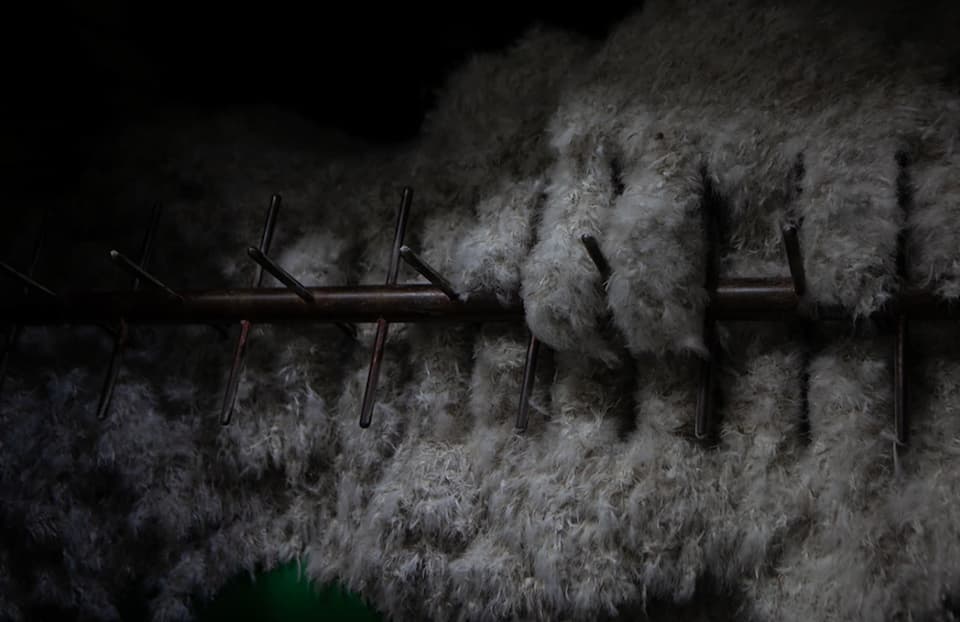
Down is amongst the most sustainable ingredients in the textile industry from a raw material perspective. But how it is processed can have a tremendous impact on not only the quality of the insulation, but that insulation’s impact on the environment. A lot of time and money can be saved by using harsh chemicals and bleach to produce a “clean” down, but at what cost? ALLIED differentiates itself from those cheaper down supply chains by making sure that every detergent used is not only safe for the environment, but also palm oil free.

ALLIED also has a robust water recycling and treatment system to ensure that all water used in the processing of the down can be reused and done so that also reduces the amount of detergent needed in a typical processing.

ALLIED was the first down supplier to achieve bluesign® system partner status and continues to work with bluesign® in addition to Oeko-Tex so all down from ALLIED is both an official bluesign® approved and Oeko-Tex 100 certified ingredient.

ALLIED also works with the HIGG index and closely monitors all carbon emissions in all facilities. Our annual sustainability report can be accessed at the top of the page.

As stewards, ALLIED has partnered with Protect Our Winters and other important organizations to help change the way we, as a community at large, change the way we think about the things we use and how we impact the planet looking towards a cleaner, brighter future.
In 2019, a full scale Life Cycle Assessment was completed to understand the true impacts of down insulation versus the alternatives.

The LCA found that down, over ALL categories, has between 85% - 97% lower environmental impact.

Recycled polyester insulation has 18 times higher climate change impact than down.

This study is also simply cradle to gate. It does not take into account the longevity of down products. Synthetic insulations have to rely on a mechanical crimping of the fibers to produce loft and warmth. As the natural shape of the fibers are straight, this mechanical crimping starts to straighten quite quickly and loss of loft is significant over a single season or two. Down, due the natural fibers’ ability to create loft will take decades to lose the same amount of loft and warmth. When considering the entire life of the product, the impact difference will grow even further.

Down also has a significantly higher warmth to weight ratio, meaning for a given warmth, much less material can be used - again saving resources that are not accounted for in this study.

Learn more about the LCA here.

ALLIED’s carbon calculator has been built in order to look at the total impact of a product’s down insulation and compare to both a synthetic alternative and provides real world carbon emissions comparisons.

The above calculator is based on the impact of 800 fill power white goose down sourced from China and processed in our Hangzhou facility.

ALLIED’s carbon calculator has been built in order to look at the total impact of a product’s down insulation and compare to both a synthetic alternative and provides real world carbon emissions comparisons.

Comparable synthetic alternative impact data uses published industry average baselines for both the production of amorphous polyethylene and terephthalate (PET) granulate and its subsequent conversion into finished polyester fiber, as found in the Ecoinvent 3.12 database. This baseline accounts for fiber production, but does not consider raw material (petroleum) extraction, transportation, downstream manufacturing, transportation or end of life pollution.

Real world equivalents are calculated using standardized carbon conversion factors. Figures are estimated based on global average data and representative sequestration rates. All equivalents are meant for illustrative purposes only.

In 2025, ALLIED engaged digital product passport organization, Green Threads, to do a robust verified audit of the carbon emissions of every product offered from both the US and China and will continue to audit our facilities in Europe, Canada and Vietnam.

For the first phase published in late 2026 and included in the TrackMyDown tool for every lot, ALLIED looked at the impact of all our down offerings, starting with the abattoir, including all abattoir impacts of sterilization, travel to processing facility and all impacts associated with the complete processing of the material to the moment it ships out (including all packaging for shipping).


CHINA

Specification Carbon Footprint (CO2e per Kg of down)
Grey Duck (All Fill Powers)0.38
Grey Goose (All Fill Powers)0.43
White Duck (All Fill Powers)0.40
White Goose (All Fill Powers)0.35
RENU 6000.30
RENU 7000.30
RENU 7500.30
RENU 8000.30


US — Grey Goose Down (GGD)

Fill Power Carbon Footprint (CO2e per Kg of down)
GGD 5501.27760
GGD 6001.27760
GGD 6501.28260
GGD 7001.29760
GGD 7501.32760
GGD 8001.33914
GGD 8501.36021
GGD 9001.38760
GGD 9501.46427
GGD 10001.59804


US — White Goose Down (WGD)

Fill Power Carbon Footprint (CO2e per Kg of down)
WGD 5501.27760
WGD 6001.27760
WGD 6501.28260
WGD 7001.29760
WGD 7501.32760
WGD 8001.33914
WGD 8501.36021
WGD 9001.38760
WGD 9501.46427
WGD 10001.59804


US — RENU

Fill Power Carbon Footprint (CO2e per Kg of down)
RENU 6001.29
RENU 7001.29
RENU 7501.29
RENU 8001.29

Verified carbon footprint represents the total embodied environmental load of this specific lot. Carbon footprint information has been produced by Green Threads DPP following ISO14067:2018 Carbon Footprint of Products, PAS2050:2011 Specification for the assessment of the life cycle greenhouse gas emissions of goods and services, Product Category Rules - Apparel, Except Fur and Leather Apparel (PCR2024:03). Amounts used received direct form organisations, industry estimates used for motors associated with drying and washing (in slaughterhouse) and actual data used for ALLIED processing facilities. Emission factors used are Defra 2025 (transport) and Ecoinvent 3 11 (water and input materials), country specific energy factors.

While most organizations state that since down is a waste product and no birds are raised for their down alone, we do not need to account for any portion of the raising of the birds. However, ALLIED will continue to study the duck and goose supply chain in its entirety to help better quantify total potential impact.

HIGG Index logo
[ HIGG Index ]

ALLIED is committed to working with the HIGG index to increase our environmental performance and offer complete transparency to our partners and those consumers using ALLIED down filled products.